Gamesugar

December 13, 2009

Designing The Red Star

Filed under: Features — Tags: , , , , , — Jamie Love @ 11:25 am

Designing The Red Star Interview
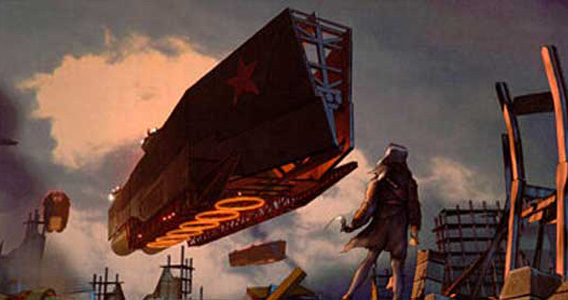
My first encounter with The Red Star was a moment of complete chance. I happened to pick up the September 2004 issue of Play Magazine one morning – bewitched as usual by the shiny cover. Discovering a preview for The Red Star, I was instantly seduced by the visual style and eagerly read about the Acclaim title, which ambitiously aimed to merge elements of both the SHMUP and Beat ‘Em Up games of my youth into a single and instantly addictive action experience.

There was also a clear intention to create a game that was simply fun to play. Between the images shown, and the glowing preview Play gave the title, the only question that remained was whether I would buy the game for my Xbox or PS2.

But this all came crashing down when, with the game essentially completed and reviewed by several journalists, Acclaim went bankrupt in late 2004. Rumors continually surfaced, claiming that company X or Y might potentially bring the title to retail, but in the end gamers would have to wait until April 2007 for XS Games to finally release it.

And if this delay was painful for me, it was undoubtedly agonizing for Ara Shirinian, who worked as a designer on the game,

“…we were wrapping up the game (that’s a whole other story right there). I and the other designers on the project felt like if we had a few more months we could really polish and fix up the most problematic parts, but you never get to truly finish a professional game project, they just make you stop working at some point.”

Recently, I’d stumbled across a site that contained a scan of that same September 2004 issue of Play Magazine, as well as a listing of several boss encounters throughout the game. I was impressed with the layout, and dumbstruck to find that the page belonged to Ara, who created many of the scenarios within the game that have kept me replaying the title to this very day.

My fingers hesitated more than a few times while typing out an email, which soon after began an exchange that has given me a great deal more to consider not only about The Red Star, but about the process and state of game design as it stands today.
(more…)

Review – Mirror’s Edge

Filed under: Reviews — Tags: , , , , , , — Jamie Love @ 11:20 am

Review Mirrors Edge
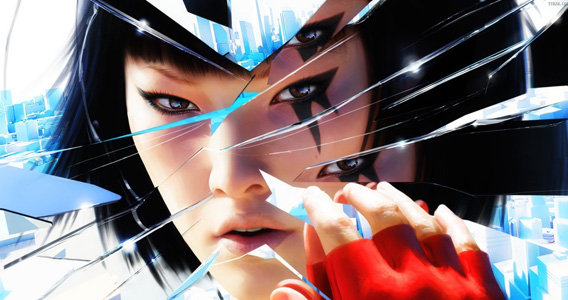
DICE’s long-anticipated release of Mirror’s Edge is the perfect example of a minefield for game journalists and reviewers. It’s a situation where there is no ideal position to take, where one is either criticized for praising a glorified technical demo or for criticizing innovation while consistently demanding it. In an industry that is plagued by repetition we should certainly be careful not to dismiss new ideas when they surface, but neither should we ignore the fact that the industry has evolved, and a game is not simply one element or mechanic, but the complete presentation that creates a world players find rewards from investing in.

Consequently Mirror’s Edge is certainly the most divisive title of the year, evoking extreme reactions, whether positive or negative upon playing. And it’s important to separate that statement from a simplistic argument between fans of Resistance and Gears of War. This is a situation where the developer has introduced innovation to an established genre, and thus the game faces both an audience seeking new experiences as well as those entrenched in a set style of game-play.

(more…)

The Burden of Being – Samus Aran

Filed under: Editorial Rants — Tags: , , , , , , , — Jamie Love @ 11:13 am

Samus Aran

Originally Published via Toronto Thumbs – June 14, 2009

Few revelations could have placated the long time Nintendo faithful at E3 this year more than the announcement that another Metroid title was in development. The applause within Club Nokia was instantaneous, and I’m certain the person to my right started convulsing almost immediately; the person to my left added “new Metroid game” to his notes as if he’d forget, but that’s another story. As gamers have absorbed the news, there’s a nagging concern as the knee-jerk excitement gives way to a recognition of what was shown in the footage.

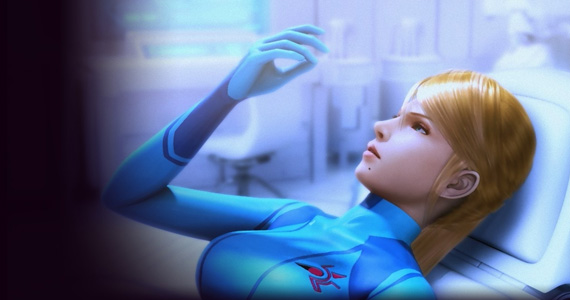
The Team Ninja project consists of video sequences focused on developing a back story for the bounty hunter, presenting characters and emotional elements through externalized story telling tactics. In other words, aspects that are largely foreign to the series. Nintendo told me that the project was about telling a different story in the franchise, and for now that appears to rely on anime-styled cinema to wedge a new entry into the series. I can’t help but think that this has more to do with selling units in Japan, where the series has proved less popular compared to Nintendo’s other storied franchises. Yet there’s more at stake than that.

As Hideo Kojima wisely pointed out at GDC this year, technical limitations played a definitive role in the design and narrative aspirations of early videogames. Designers were forced to find unique ways to tell stories, often achieving fresh narrative approaches by nature of the marriage between what was desired and what was technically possible. While that caused Kojima to create a stealth-oriented genre that continues to thrive today, it also gave birth to a science fiction series that represents the single most symbolically significant franchise Nintendo claims ownership over, linked to the best examples of a genre where the primary goal is to think harder about who we are and where we are going.

With technical limitations fading and giving rise to unparalleled design possibilities, there is every reason to be concerned that this most preciously-guarded franchise will be raided and exploited, lessening the significance in the attempt to broaden the appeal.

(more…)

The Burden of Being – Joanna Dark

Filed under: Editorial Rants — Tags: , , , , , , , , — Jamie Love @ 11:11 am

Perfect Dark

Originally Published via 4ColorRebellion – August 31, 2009

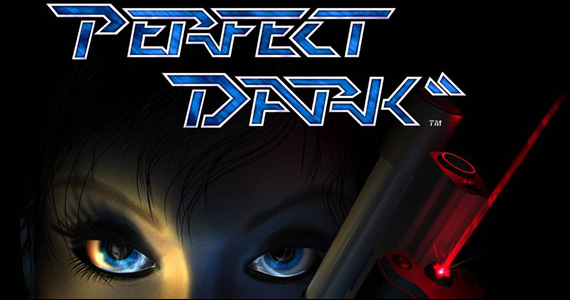
Joanna Dark was born into a harsh and stark world, one of unbridled technological advancements, largely governed by the corrupted greed of corporate agendas. In short, Perfect Dark brought all the many splendid things which help make the science-fiction genre slick and delicious while pushing hard into the reaches of a new slipstream frontier.

Beyond the reality of the game, Joanna also faced the harsh expectations of a skeptical audience, which questioned her ability to fill the shoes of the spy who not only preceded her, but also made the FPS genre successful on a gaming console.

Yet the success she would achieve wouldn’t come from cheap imitations, but rather from the ambition to surpass previous benchmarks, pushing the genre further to obtain true legitimacy for her would-be franchise.

(more…)

« Newer Posts

Powered by WordPress